Success Story: From Wheelchair to Walking Independently After Guillain-Barré Syndrome
Published
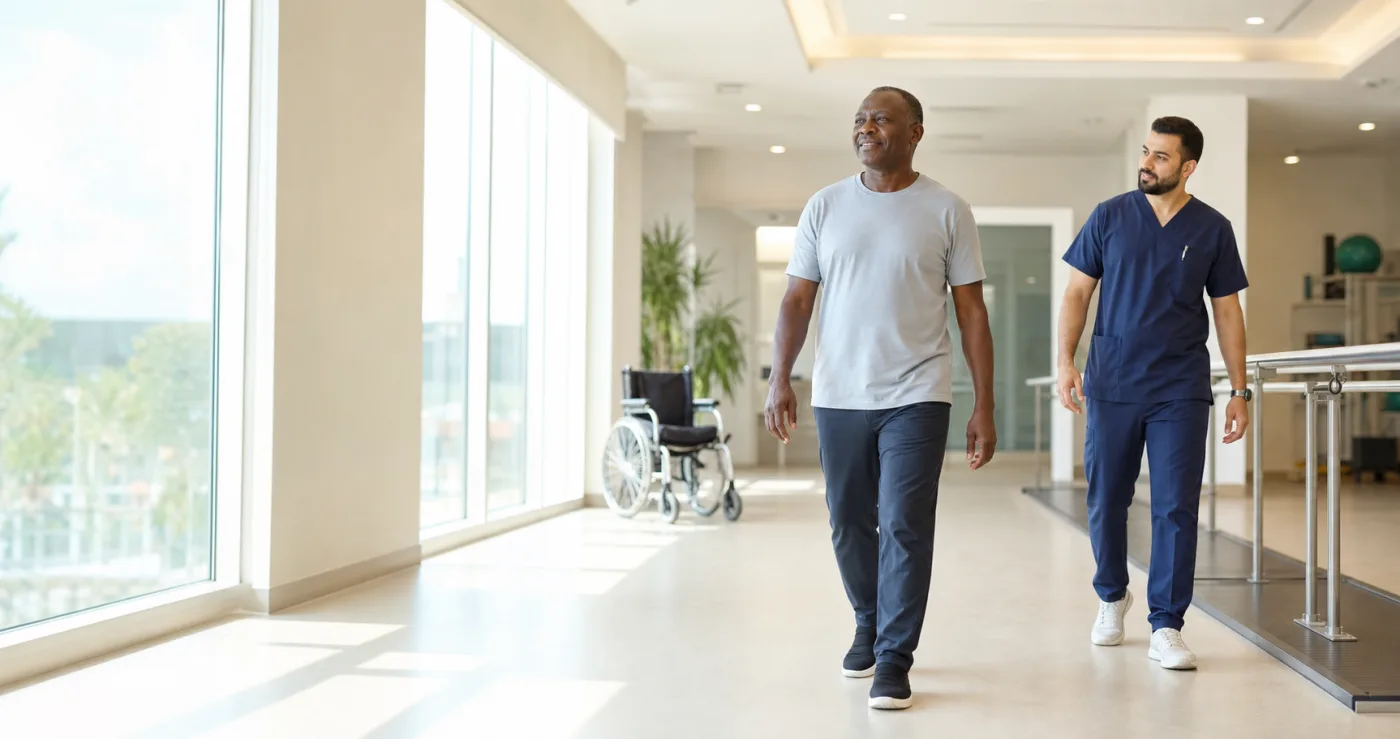
Some recovery journeys begin when a patient loses the ability to perform even the simplest everyday activities. For Mr. M.B.A. from Katsina State, Nigeria, the journey began with worsening muscle weakness that eventually left him unable to stand or walk.
Today, following diagnosis, treatment, and rehabilitation, he is walking independently and has returned to his work and normal daily life.
Muscle Weakness That Worsened Each Day
Mr. M.B.A. had previously undergone cervical disc surgery at another medical provider, outside the care and responsibility of Hospitals Co Egypt.
During the period that followed, he began experiencing progressive muscle weakness that became worse each day. He suffered several falls, including repeated falls in the bathroom, until he eventually lost the ability to stand or walk.
This sequence describes when the symptoms appeared but does not by itself establish a causal relationship between the previous surgery and the condition that was later diagnosed.
Searching for an Explanation
Following a friend’s recommendation, the patient contacted Hospitals Co Egypt and traveled to Egypt in search of specialist evaluation and an appropriate treatment plan.
Our medical coordination team arranged the necessary investigations and diagnostic tests before referring him to experienced specialists in muscle weakness and peripheral nerve disorders.
Reaching the correct diagnosis was essential. Weakness and mobility difficulties can occur in several conditions, while the appropriate treatment depends on the underlying cause.
A Diagnosis of Guillain-Barré Syndrome
Following a comprehensive assessment and review of the test results, Mr. M.B.A. was diagnosed with Guillain-Barré syndrome.
Guillain-Barré syndrome is a rare immune-mediated disorder affecting the peripheral nerves. It can cause progressive muscle weakness that often begins in the legs and may extend to other parts of the body.
The condition requires careful medical assessment and monitoring because the speed and severity of its progression can differ from one patient to another.
Treatment Began Without Delay
Once the diagnosis was established, the patient began therapeutic plasma exchange, also known as plasmapheresis.
This procedure removes plasma that may contain antibodies associated with the harmful immune response and replaces it with appropriate fluids according to a plan determined by the specialist medical team.
By the grace of Allah, Mr. M.B.A. began showing encouraging improvement after only two sessions. He then completed the full course of treatment planned for his condition.
From Medical Improvement to Restored Mobility
Medical treatment was an essential step, but it was not the end of the journey. The patient required an intensive physiotherapy and rehabilitation program to help him safely rebuild strength, balance, and mobility.
The program progressed according to his response and abilities, beginning with basic exercises and advancing toward standing, walking, and greater independence in everyday activities.
With continued treatment and rehabilitation, his strength and mobility gradually improved until he could walk without assistance.
Returning to Nigeria, Work, and Everyday Life
Today, we are grateful to share that Mr. M.B.A. can walk independently. After completing the required care, he returned safely to Nigeria in good health.
He has also resumed his work and daily activities after previously being unable even to stand.
For the patient, this outcome represents more than an improvement in mobility. It means regaining his independence, confidence, and ability to move forward with his life.
Diagnosis, Treatment, and Rehabilitation: An Integrated Journey
This story demonstrates the importance of combining an accurate diagnosis, timely treatment, and structured rehabilitation. Restoring function after neurological weakness may require more than one intervention and can involve collaboration among neurologists, physiotherapists, rehabilitation professionals, and other care providers.
Recovery from Guillain-Barré syndrome differs among patients. Some may respond more quickly, while others require longer periods of treatment, rehabilitation, and follow-up.
Supporting Patients Throughout the Journey
At Hospitals Co Egypt, we coordinate the medical journeys of international patients from report review and diagnostic testing through specialist access, treatment arrangements, rehabilitation, and follow-up.
We believe that the appropriate diagnosis, access to experienced specialists, and timely treatment can make a meaningful difference in a patient’s life.
Our goal is to make your medical journey in Egypt easier, safer, and better organized while standing beside you at every step toward renewed health and independence.
Medical notice: This story describes an individual patient’s experience and does not guarantee similar outcomes for others. The severity of Guillain-Barré syndrome, response to treatment, and recovery period vary among patients. Sudden or progressive muscle weakness requires urgent medical assessment.
Have a case you want reviewed?
Send your medical reports and our partner specialists will look at them.